Coral Reefs: Ancient Cities of the Sea!
Amazing Fact: Coral reefs are over half a billion years old, making them the oldest complex ecosystems still thriving on Earth! These ancient cities of the sea existed before there was any life on land. Today, they support an astounding diversity of marine life, earning their reputation as the rainforests of the ocean.
The Living Reef
Coral reefs are spectacular to behold, lush gardens in the sea, supporting a staggering amount of marine life in a densely packed, thriving marine metropolis. In fact, coral reefs have the largest abundance and greatest diversity of life living together of any place on Earth, including the tropical rain forests. People often refer to coral reefs as “rainforests of the sea.”
A dive on a coral reef is a voyage to another world. The surrealistic landscape is shaded in blue and surrounded by life. The coral reef is a gathering place in the ocean. It is an oasis in a desert, a place which gives shelter and food in an ocean where these things are rare. In fact, the entire tropical ocean ecosystem depends on the reef for sustenance.
Types of Corals
Hard Corals (Reef Builders)
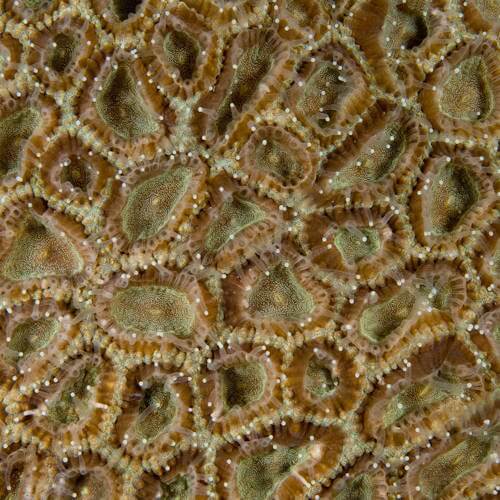
Hard corals produce rigid, boulder-like reefs. They include species like brain coral, star coral, and staghorn coral. These are the primary architects of the reef structure, slowly building massive underwater mountains of limestone over millennia.
Although living coral hides its skeleton under living tissue, a dead piece of coral reveals just the white skeleton underneath.
Soft Corals
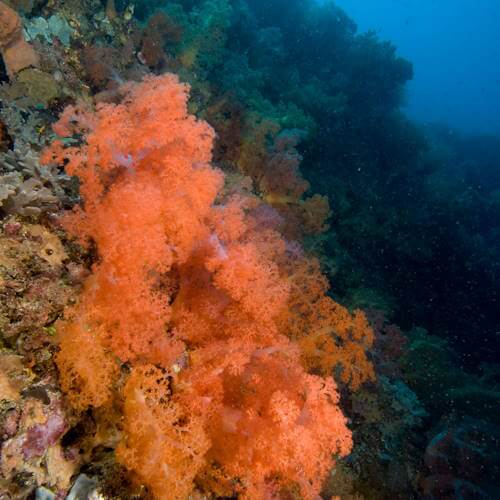
Not all corals produce rigid, boulder-like reefs. There are many species of soft corals, which look like trees or bushes, flexing in the currents. Many a snorkeler or diver has mistaken these animal colonies for plants!
Reef Facts
500+ Million Years Old
Among Earth’s oldest ecosystems
25% of Marine Species
Supported by reefs covering <1% of ocean
1000+ Years Old
Some coral colonies are ancient
65°F Minimum
Temperature needed for reef growth
Coral Reef Gallery
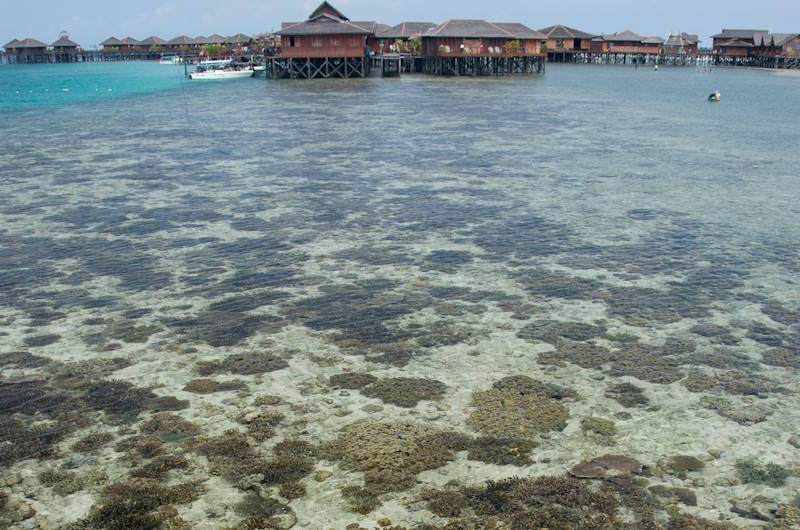
Coral as seen from the surface in shallow water, Malaysia.
Coral as seen from the surface in shallow water, Malaysia.
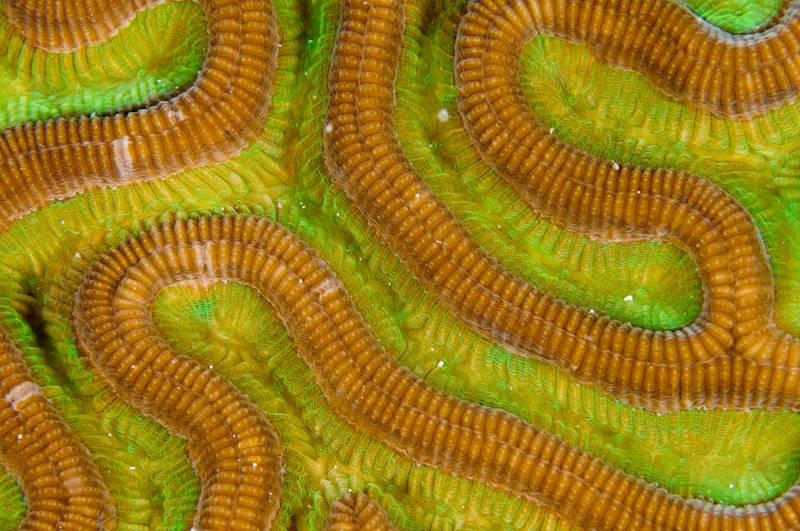
Close-up of interconnected polyps of Brain coral. The green zooxanthellae are quite obvious in this shot!
Close-up of interconnected polyps of Brain coral. The green zooxanthellae are quite obvious in this shot!
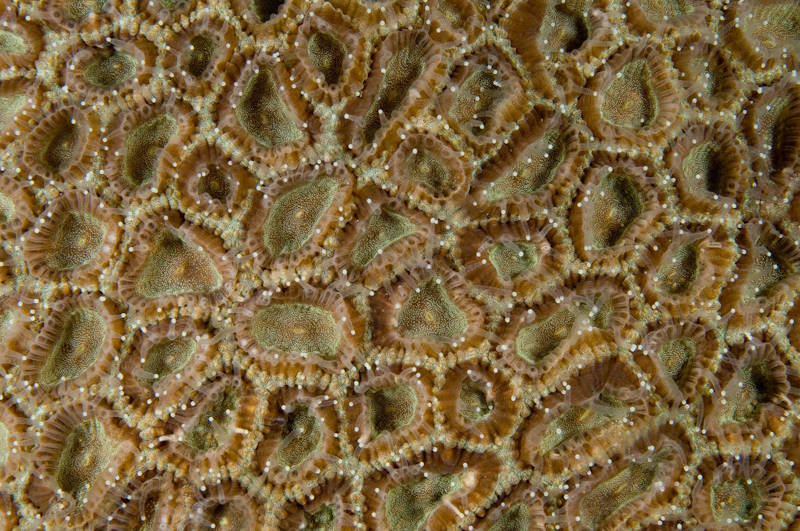
Close-up of star coral polyps
Close-up of star coral polyps
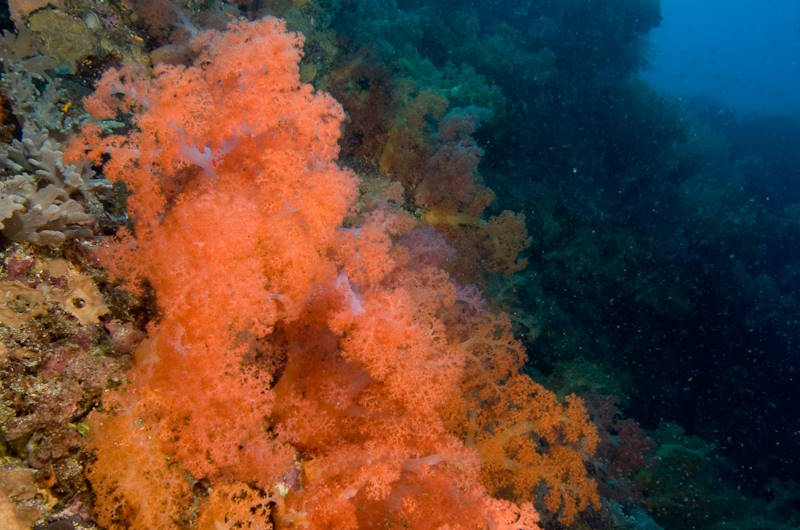
Soft coral on a wall, Philippines.
Soft coral on a wall, Philippines.
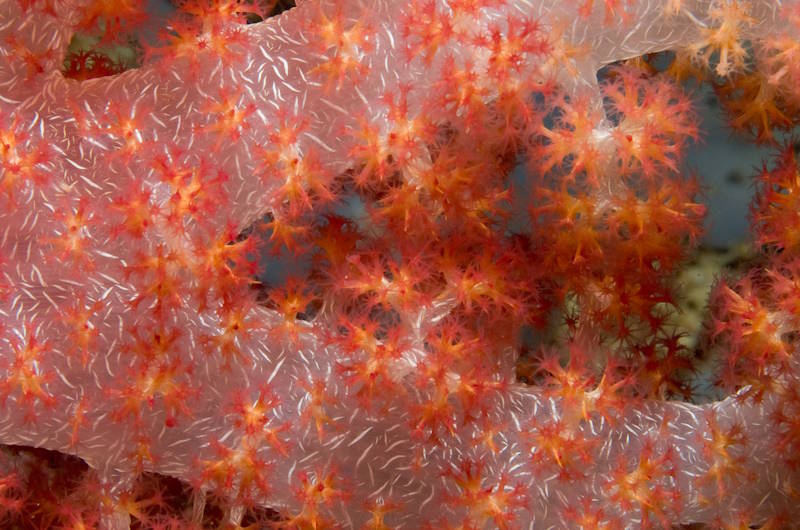
Close-up of soft coral polyps and spicules.
Close-up of soft coral polyps and spicules.
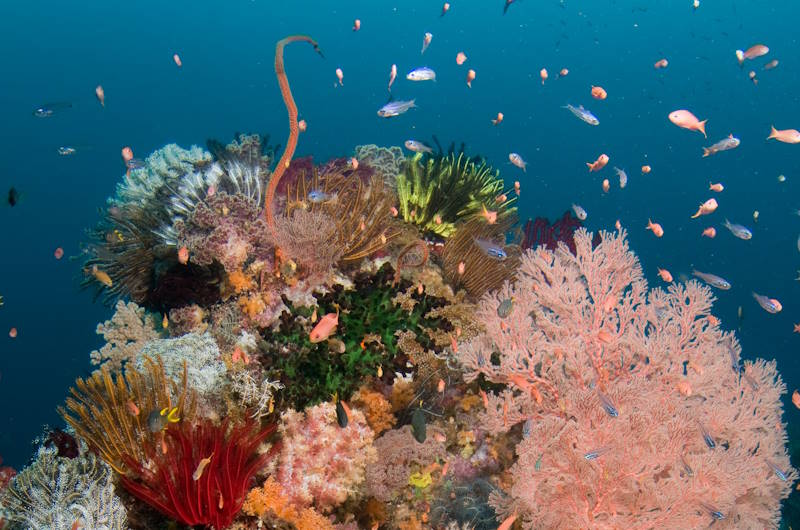
A colorful Indonesian reef.
A colorful Indonesian reef.
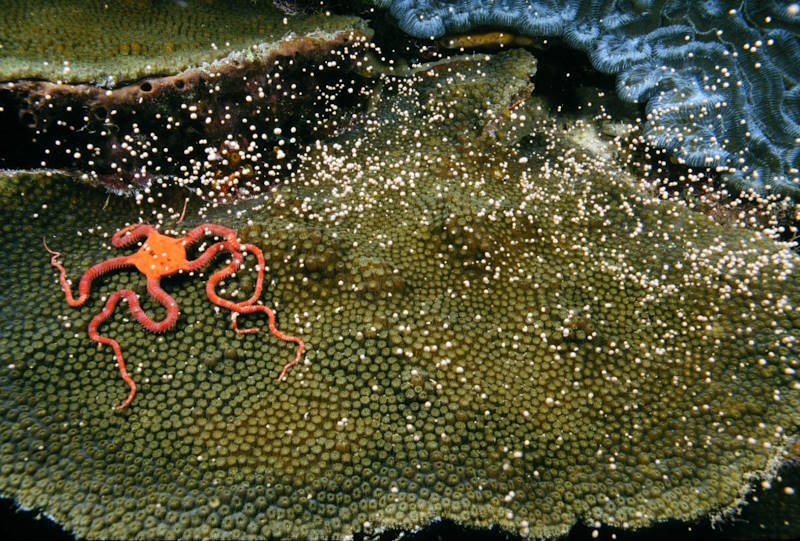
Star coral spawning, Caribbean.
Star coral spawning, Caribbean.
The Secret to Success: Zooxanthellae
In an area with this much diversity and life, it is easy to think that the tropical oceans are highly rich in nutrients. However, compared to the cold, murky waters of the temperate seas, coral reefs live in nearly sterile water. The waters of the Caribbean are clear, unclouded by plankton. In an ocean with very low food resources, all forms of life have to struggle for survival, and coral is no exception.
A Perfect Partnership
Because of the low plankton density, many corals simply cannot get enough nourishment by catching plankton with their nematocyte-laden tentacles. Many species of coral have solved this problem with a symbiotic relationship.
These corals, called hermatypic corals, have multitudes of tiny, single-celled plants (actually, a type of dinoflagellate) living in their tissues. The plants, called zooxanthellae (zoo-zan-THEL-eye), give many corals their greenish to brownish color.
Where Reefs Grow
A few varieties of small corals live in cold waters, but reefs cannot grow there. Biologists believe that cold water inhibits the coral’s ability to form associations with zooxanthellae which facilitates calcification essential for building reefs.
Coral reefs are therefore only found in ocean regions where the water is always above approximately 65 degrees Fahrenheit, or roughly between the Tropic of Cancer to the north and the Tropic of Capricorn to the south.
Reef Ecosystems
An Ocean Oasis
The importance of the coral reef in the tropical ocean ecosystem cannot be stressed enough. Coral reefs provide nesting areas and hiding spots for fish and invertebrates, making the reef into a teeming metropolis of life. This, in turn, attracts larger predators to the area looking for food.
A coral reef may be packed with fish and other marine life, while only a hundred yards from the reef, there is hardly a thing to be found. The reef truly is an oasis in the desert of the tropical ocean.
A Living Wonder
Coral reefs are among nature’s greatest spectacles. They form communities of startling complexity and help to create an entire ecosystem in oceans with low nutrient resources. Throughout their life stages, corals act as food for other animals, shelter for other animals and producers of the greatest examples of natural architecture in the world.
All this and more is done by tiny animals less than a centimeter across. Perhaps this is why the coral reef truly is a living wonder.
Reef Facts
500+ Million Years Old
Among Earth’s oldest ecosystems
25% of Marine Species
Supported by reefs covering <1% of ocean
1000+ Years Old
Some coral colonies are ancient
65°F Minimum
Temperature needed for reef growth
Coral Reef Gallery
Coral as seen from the surface in shallow water, Malaysia.
Coral as seen from the surface in shallow water, Malaysia.
Close-up of interconnected polyps of Brain coral. The green zooxanthellae are quite obvious in this shot!
Close-up of interconnected polyps of Brain coral. The green zooxanthellae are quite obvious in this shot!
Close-up of star coral polyps
Close-up of star coral polyps
Soft coral on a wall, Philippines.
Soft coral on a wall, Philippines.
Close-up of soft coral polyps and spicules.
Close-up of soft coral polyps and spicules.
A colorful Indonesian reef.
A colorful Indonesian reef.
Star coral spawning, Caribbean.
Star coral spawning, Caribbean.
Explore More Wonders
Sponges
Sharks
Echinoderms
Cnidarians
Mollusks
Sperm Whales
Chessie
Mangroves
Arthropods