Arthropods: Underwater Knights in Shining Armor!
Amazing Fact: Arthropods are the largest group of creatures on Earth, with nearly one million species dominating both land and sea!
One Million +
Species Worldwide
90%
Are Insects
85,000
Marine Species
What Makes Arthropods Special?
All Arthropods share certain characteristics making them unique from other phyla. Most obvious is the external skeleton (technically, not really a shell). Not only does this exoskeleton protect the animal like a suit of armor, but it actually does serve as the animal’s skeleton. The muscles of an Arthropod are connected to the inside of the exoskeleton, because the animal lacks an internal skeleton of any type.
The exoskeleton is made of a tough substance called chitin (KIE-tin). The muscles of an Arthropod are connected to the inside of the exoskeleton, because the animal lacks an internal skeleton of any type.
The Molting Process: Because the exoskeleton cannot grow, the animal must periodically shed its armor in order to grow. This process is called molting. The animal first grows a soft exoskeleton underneath, then cracks out of the old one!
Jointed Feet & More
The name Arthropod means “jointed-foot.” In order for the Arthropod to move in such a rigid body, it has numerous joints in its exoskeleton. Like door hinges, they allow bending in only one direction, but are surprisingly well developed. A lobster is quite flexible when necessary, and can manage to rotate its claws sufficiently to pinch its captor.
Open Circulatory System: Unlike many animals, arthropods have no arteries, veins or capillaries. Instead, blood is pumped through open spaces within the animal.
Compound Eyes: Each eye is composed of many smaller light-sensitive organs called ommatidia. These work together to detect motion rather than providing detailed sight.
Marine Arthropods Groups
Crustacea
30,000+ species – lobsters, crabs, shrimp, barnacles
Pycnogonida
500 species – sea spiders
Merostomata
5 species – horseshoe crabs
Arthropod Gallery
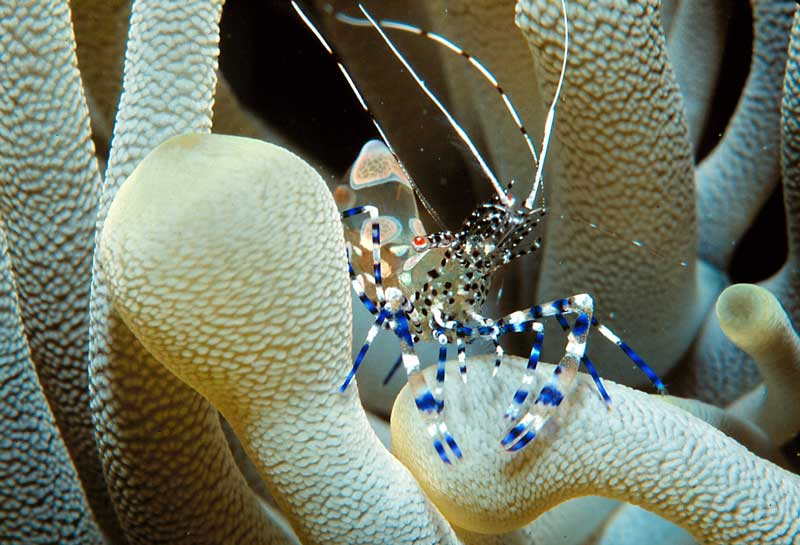
A Spotted Cleaner shrimp (Caribbean) hides among the venomous tentacles of an anemone, safe from predators. This shrimp uses its chelipeds to pluck parasites off fishes that come to the anemone for a cleaning. The shrimp gets a meal, and the fishes get cleaned.
A Spotted Cleaner shrimp (Caribbean) hides among the venomous tentacles of an anemone, safe from predators. This shrimp uses its chelipeds to pluck parasites off fishes that come to the anemone for a cleaning. The shrimp gets a meal, and the fishes get cleaned.
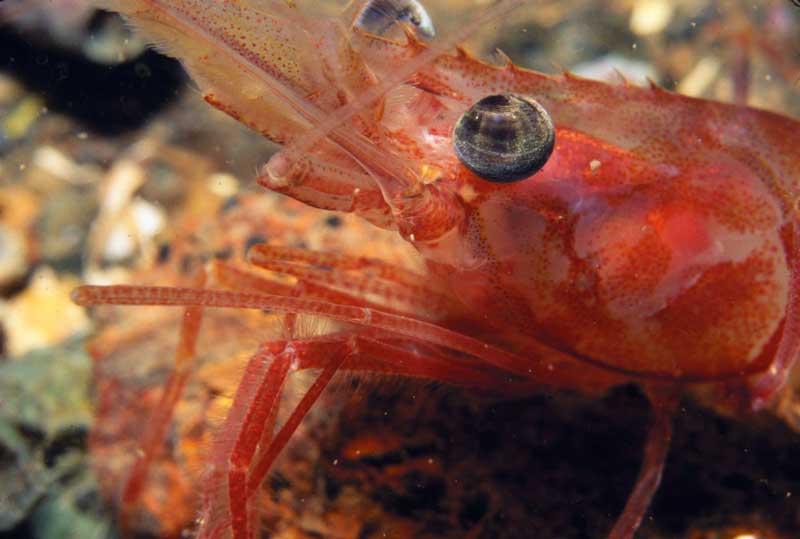
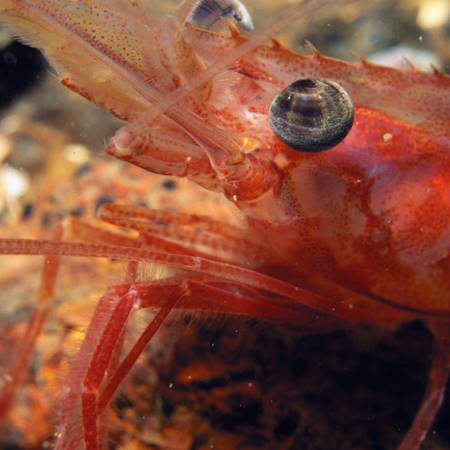
A close up of a shrimp’s eye (smaller than a pin head) shows the ommatidia of the compound eye structure.
Yo!
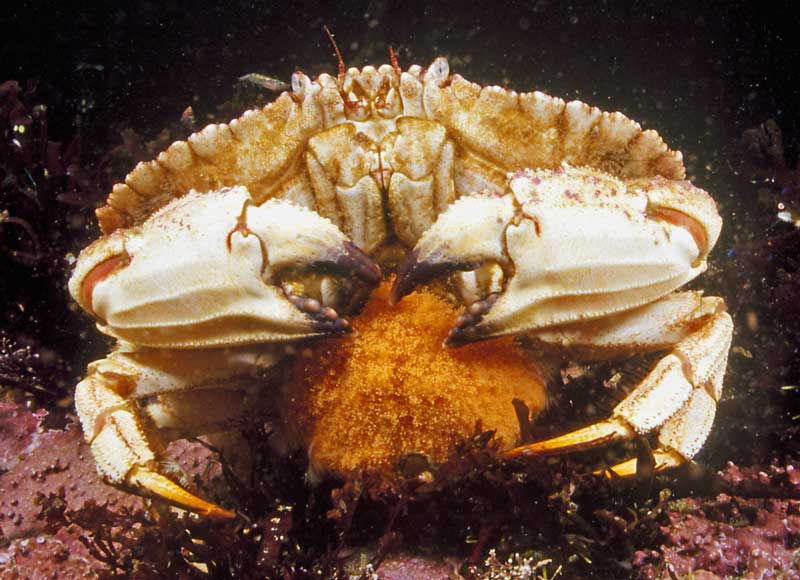
A female Rock crab, found in New England, holds her eggs under her abdomen. The orange ball of eggs contains thousands of baby crabs just waiting to hatch.
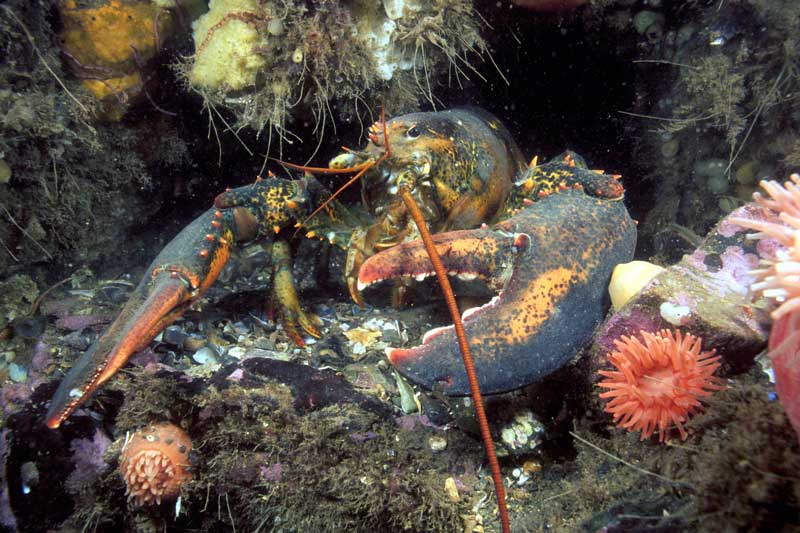
The Northern lobster, found in the northeast United States and Eastern Canada is a culinary favorite. It has large chelipeds more than capable of crushing the snails and clams on which it dines.
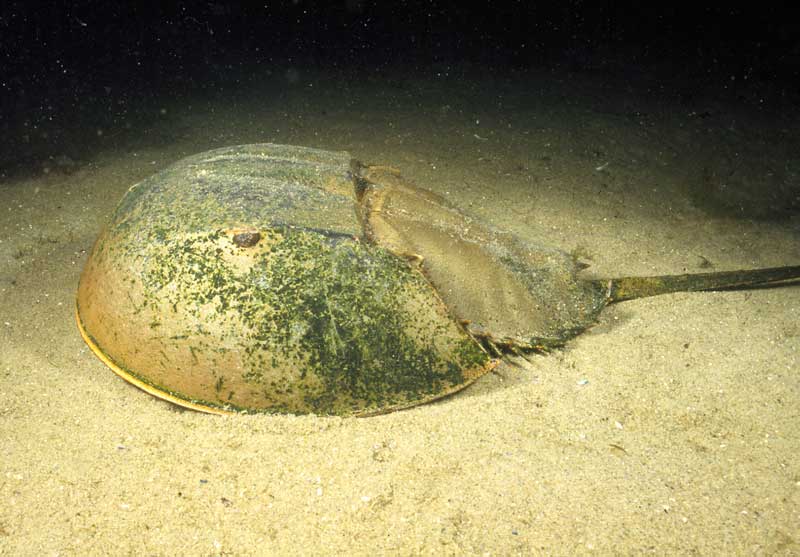
The Horsehsoe crab is an ancient animal that has proven incredibly important to medical research.
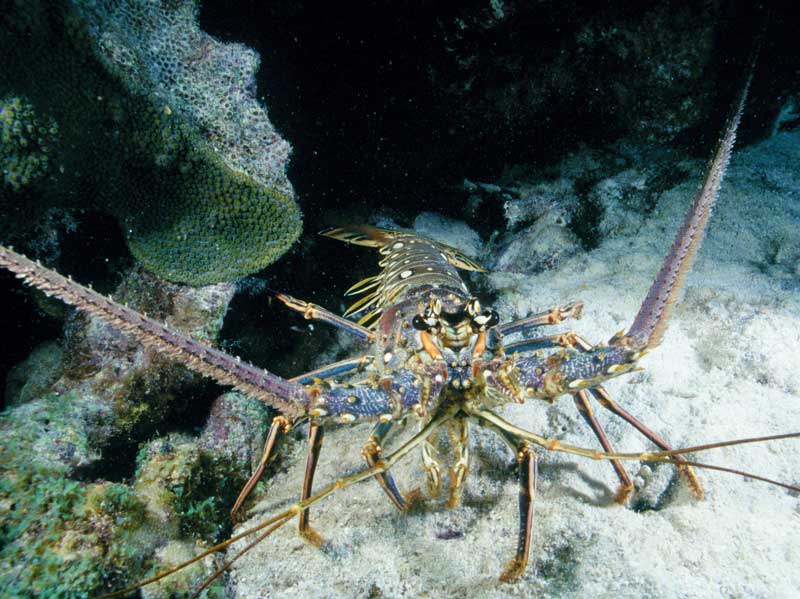
The Spiny lobster, such as this Caribbean species, has no large chelipeds. Instead, it uses long, spiny antennae as weapons. Anyone who has ever grabbed one of these lobsters without gloves has felt the effectiveness of these antennae!
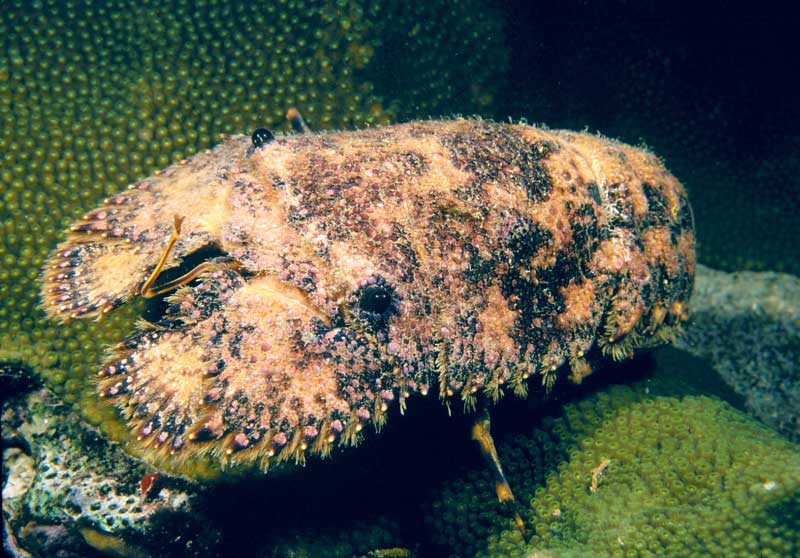
The Slipper lobster looks more like a giant underwater cockroach than a lobster. Its antennae have evolved into flat, shovel-like plates.
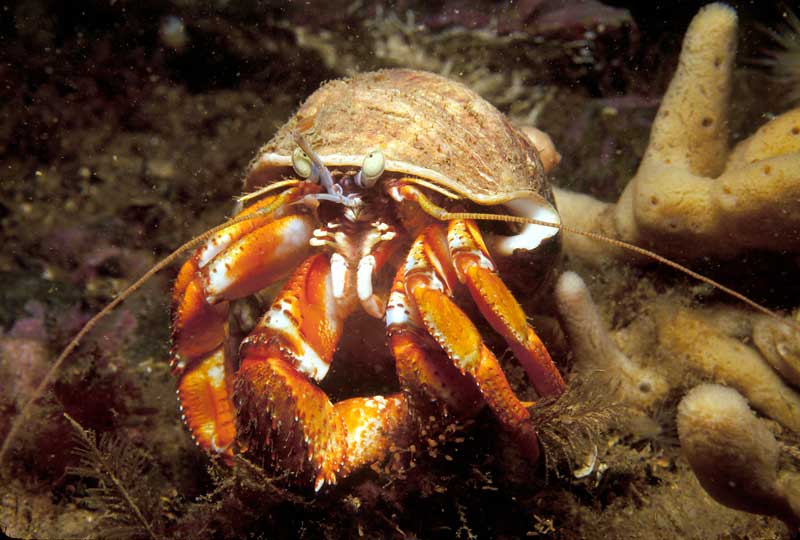
An Acadian Hermit Crab in New England lives in a snail shell. When it grows too large for the shell, it has to find another one.
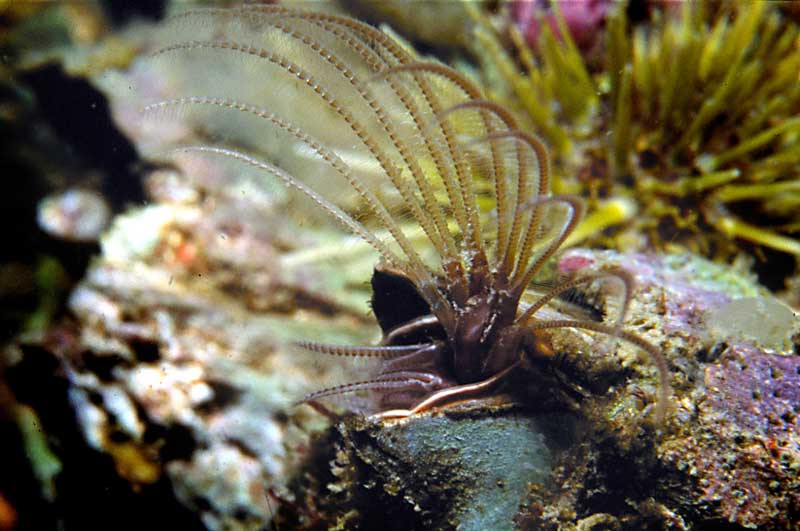
A barnacle is sort of like a shrimp standing on its head with its legs sticking out.
The Crustaceans
The crustaceans are probably best known as a source of food. Lobster, crabs and shrimp are all Crustaceans. Barnacles, amphipods, isopods, and copepods are also Crustaceans.
The Amazing Barnacles
Most Crustaceans are similar in appearance, with the most obvious exception of barnacles. The body form of the barnacle is Crustacean, but it isn’t very obvious unless examined at the larval stage.Barnacles contain special glands which produce a type of “cement” which they use to glue themselves to rocks, ships, whales, docks and just about any other hard surface.
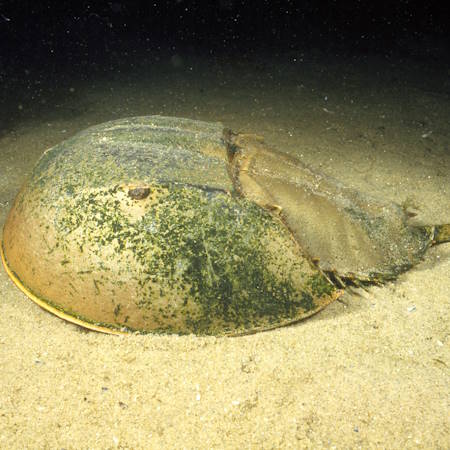
The Horseshoe Crab
There are only five species in Class Merostomata, with just one found in American waters. The Horseshoe Crab (Limulus polyphemus) is more closely related to spiders and scorpions than to crabs!
Marine Arthropods Groups
Crustacea
30,000+ species – lobsters, crabs, shrimp, barnacles
Pycnogonida
500 species – sea spiders
Merostomata
5 species – horseshoe crabs
Arthropod Gallery
A Spotted Cleaner shrimp (Caribbean) hides among the venomous tentacles of an anemone, safe from predators. This shrimp uses its chelipeds to pluck parasites off fishes that come to the anemone for a cleaning. The shrimp gets a meal, and the fishes get cleaned.
A Spotted Cleaner shrimp (Caribbean) hides among the venomous tentacles of an anemone, safe from predators. This shrimp uses its chelipeds to pluck parasites off fishes that come to the anemone for a cleaning. The shrimp gets a meal, and the fishes get cleaned.
A close up of a shrimp’s eye (smaller than a pin head) shows the ommatidia of the compound eye structure.
Yo!
A female Rock crab, found in New England, holds her eggs under her abdomen. The orange ball of eggs contains thousands of baby crabs just waiting to hatch.
The Northern lobster, found in the northeast United States and Eastern Canada is a culinary favorite. It has large chelipeds more than capable of crushing the snails and clams on which it dines.
The Horsehsoe crab is an ancient animal that has proven incredibly important to medical research.
The Spiny lobster, such as this Caribbean species, has no large chelipeds. Instead, it uses long, spiny antennae as weapons. Anyone who has ever grabbed one of these lobsters without gloves has felt the effectiveness of these antennae!
The Slipper lobster looks more like a giant underwater cockroach than a lobster. Its antennae have evolved into flat, shovel-like plates.
An Acadian Hermit Crab in New England lives in a snail shell. When it grows too large for the shell, it has to find another one.
A barnacle is sort of like a shrimp standing on its head with its legs sticking out.
Explore More Wonders
Sponges
Sharks
Coral Reefs
Echinoderms
Cnidarians
Mollusks
Sperm Whales
Chessie
Mangroves