Echinoderms: Spiny-Skinned Creatures
Amazing Fact: Echinoderms use hundreds of tiny tube feet to walk, grip prey, and cling to rocks with incredible strength! Found only in the ocean, these spiny-skinned creatures include sea stars, sea urchins, and sea cucumbers. Despite their alien appearance, echinoderms are more closely related to humans than to most other invertebrates!
What Makes an Echinoderm?
The term echinoderm is from the Greek echinos (spiny) and derma (skin). Echinoderms are perhaps the most unusual of all animal phyla. At first glance, the sea urchin might not appear to have much in common with a sea star, but they are remarkably similar in construction.
Five-Part Radial Symmetry
All members of this phylum have a distinctive pentamerous radial symmetry (pentamerous meaning “five parts” and radial meaning radiating from a center point, like the spokes of a wheel).
Despite the fact that a sea star might have 6, 7 or even more arms, there are always five primary radii, and any extra arms are just multiples of five. For example, a sea star with 8 arms actually has two arms on one radius, and could be considered to have only 4 radii. Humans, like most other animals, have bilateral symmetry, meaning a right and left side.
The Stelleroids: Sea Stars
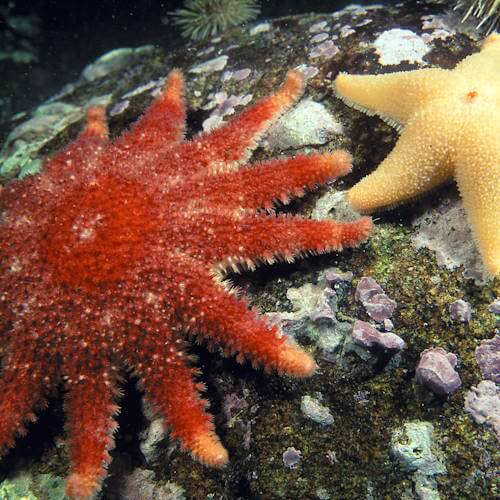
Perhaps the most common echinoderm is the sea star. Although more well known as the “starfish,” sea stars are not actually fish. The scientific community prefers to reserve the term “fish” for vertebrates with fins.
The subphylum Stelleroidea contains two classes of sea stars:
Echinoderm Classes
Asteroidea
1,900+ species – True sea stars, sun stars
Ophiuroidea
2,000+ species – Brittle stars, basket stars
Echinoidea
950+ species – Sea urchins, sand dollars
Holothuroidea
1,400+ species – Sea cucumbers
Crinoidea
600+ species – Sea lilies, feather stars
Echinoderm Gallery
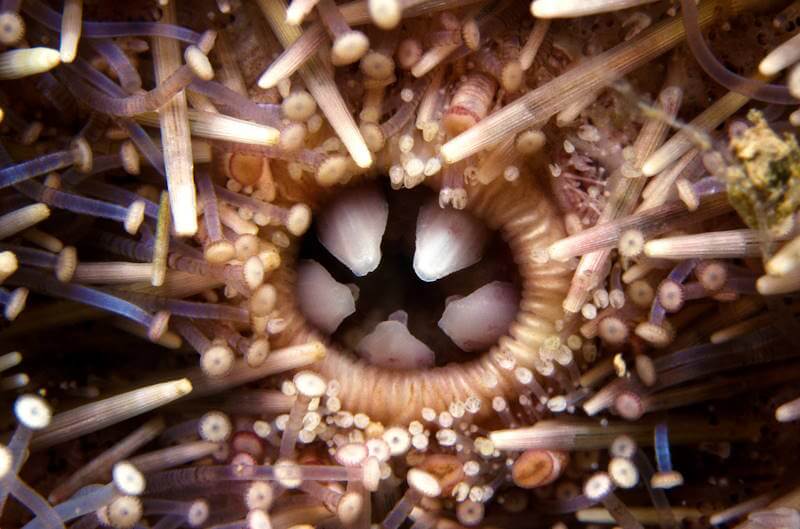
The mouth of an Aristotles Lantern Sea Urchin
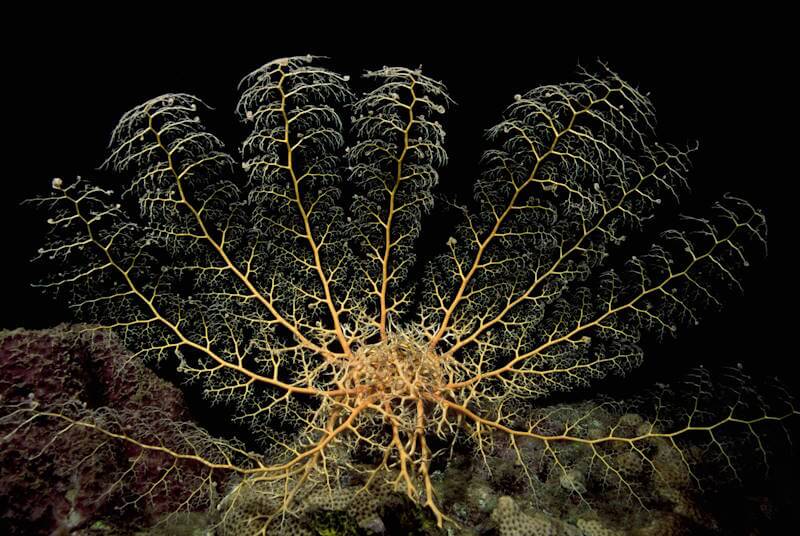
This basket star, photographed in the Caribbean, is a good example of a Ophiuroid.
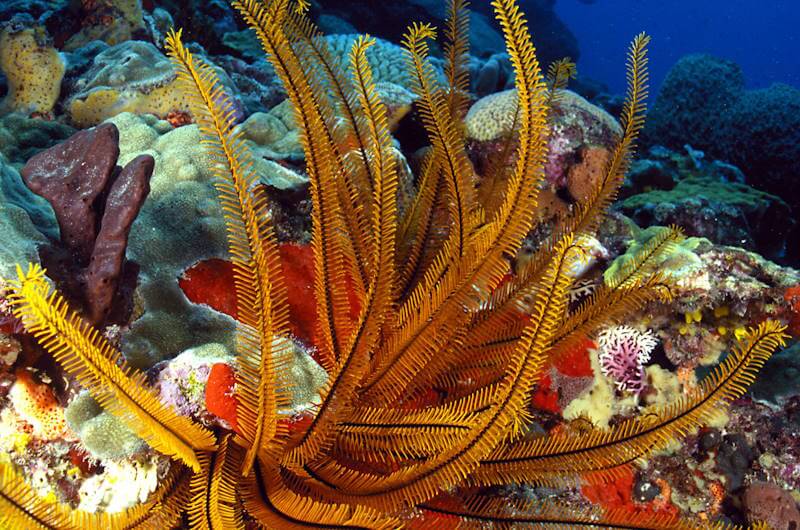
Crinoid
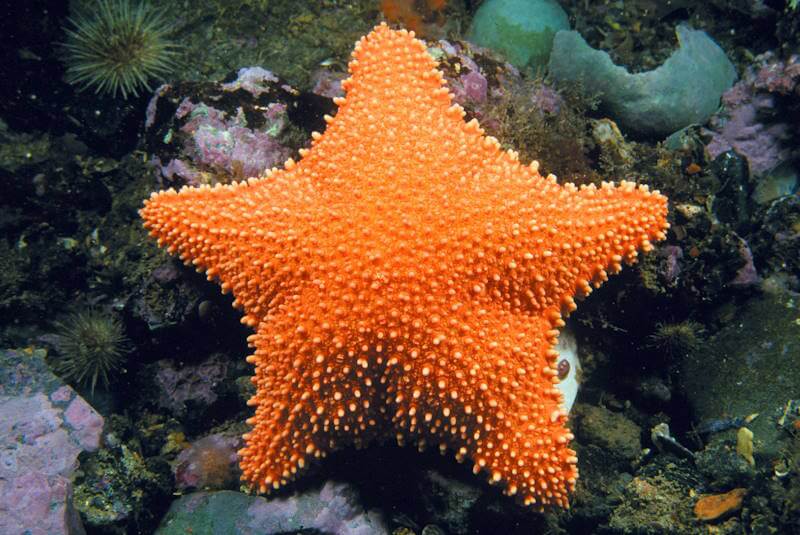
Horse Star
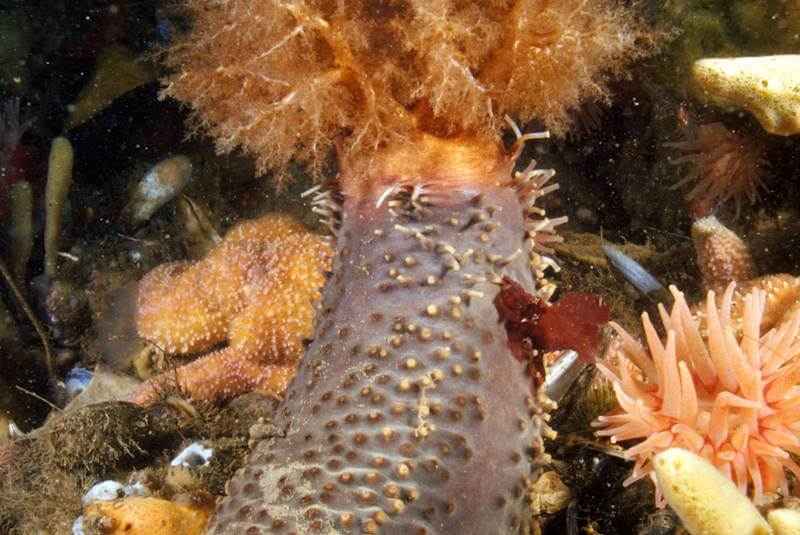
The Orange-footed sea cucumber lives in the North Atlantic. It resembles a football with tentacles at one end for feeding.
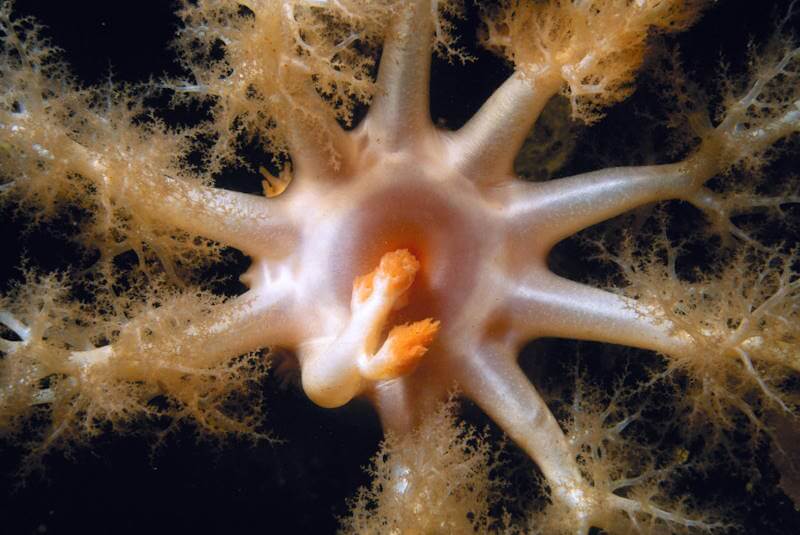
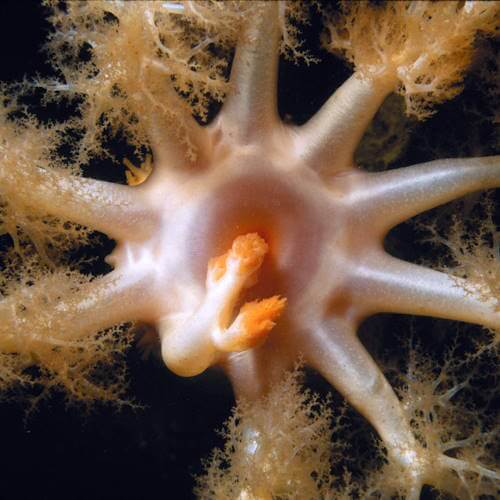
A sea cucumber’s feathery tentacles. It catches plankton in its arms and then licks them off one at a time.
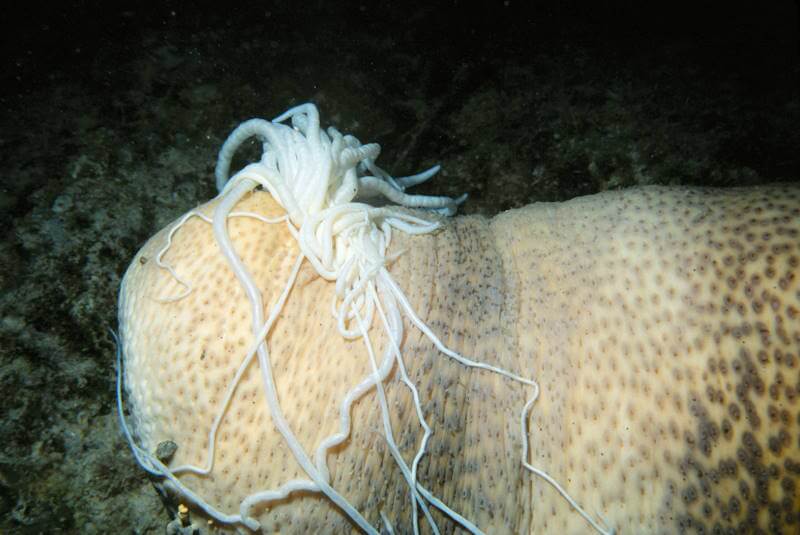
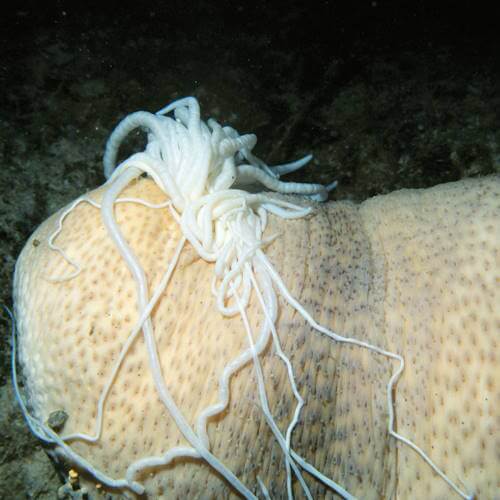
This sea cucumber is eviscerating a portion of its intestines to thwart an attack.
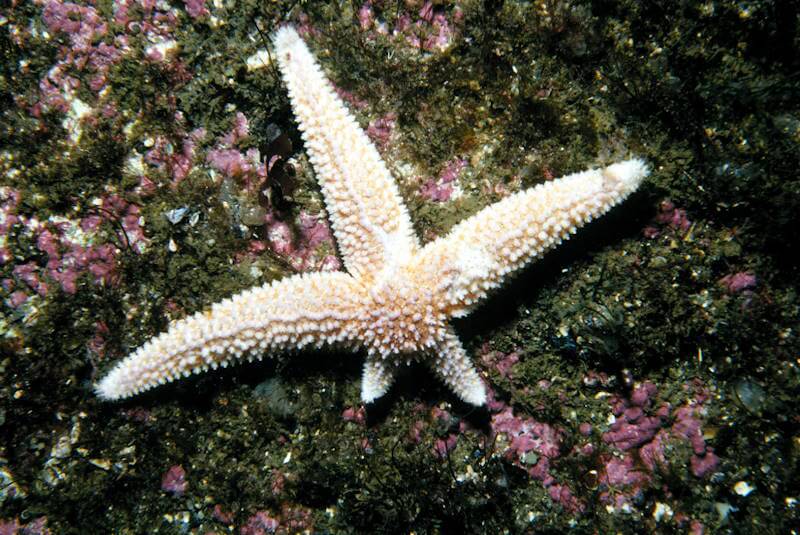
This Northern sea star, photographed in Massachusetts, is regenerating two lost arms. It will take over a year, but they will be good as new!
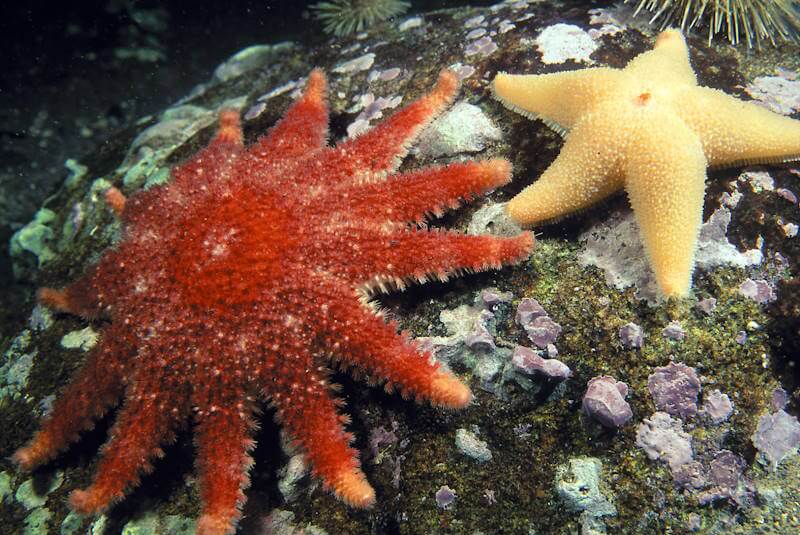
Two sea star species resting on underwater rocks
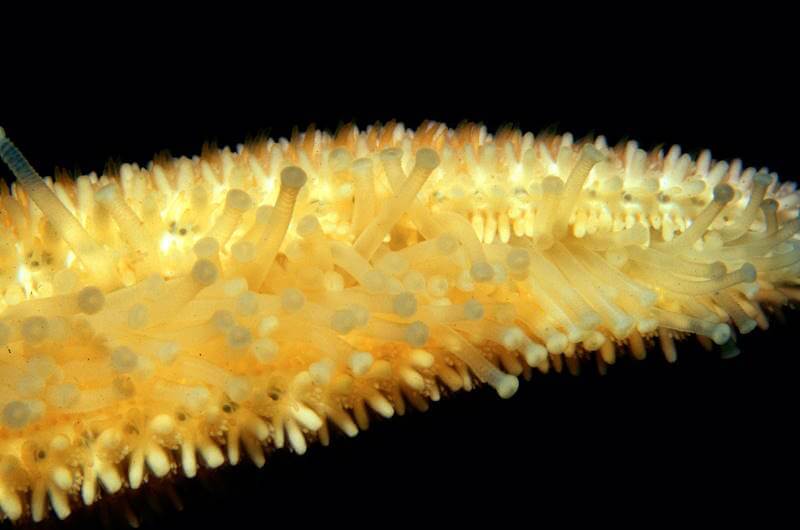
Sea Star tube feet
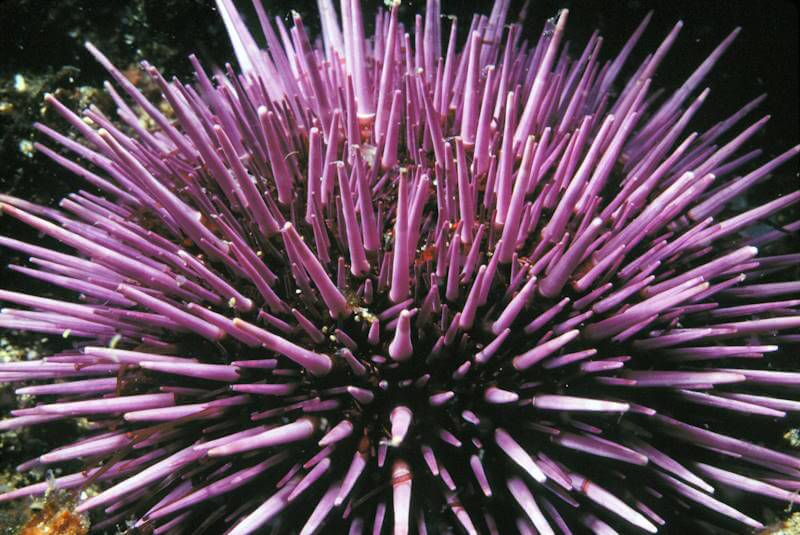
This Purple sea urchin from California has hundreds of pointy spines for protection.
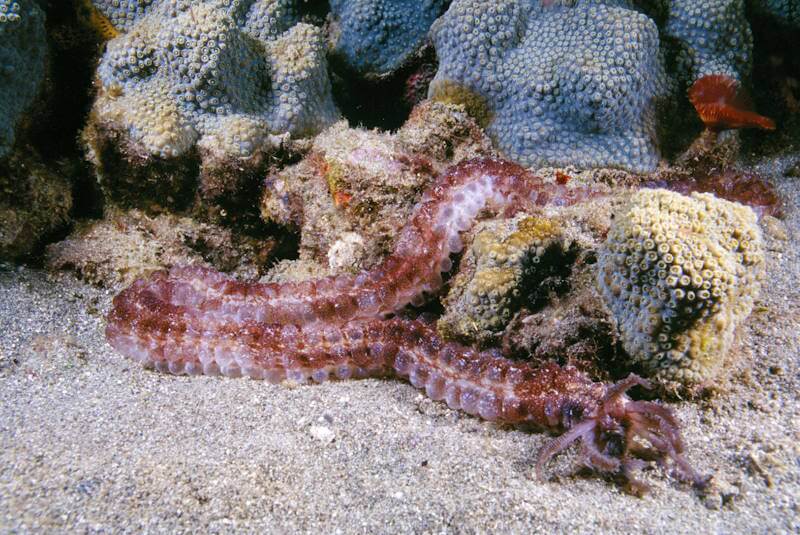
The Tiger Tail sea cucumber feeds on particles found in the sand on the bottom.
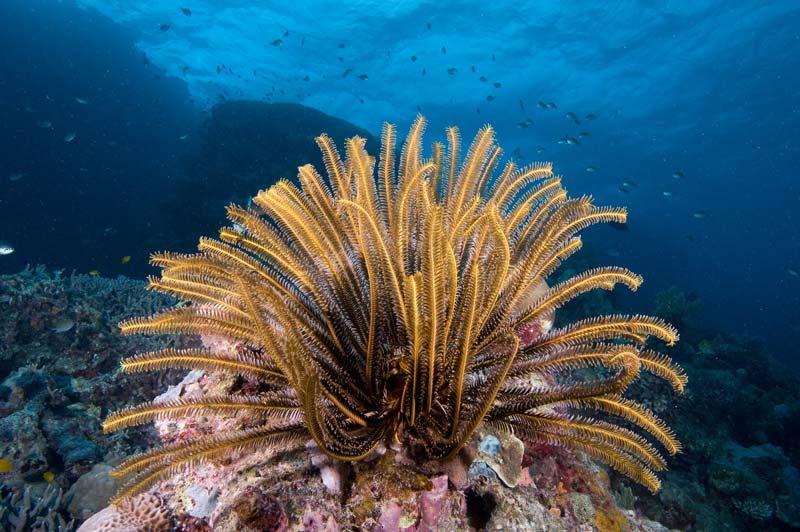
Crinoid
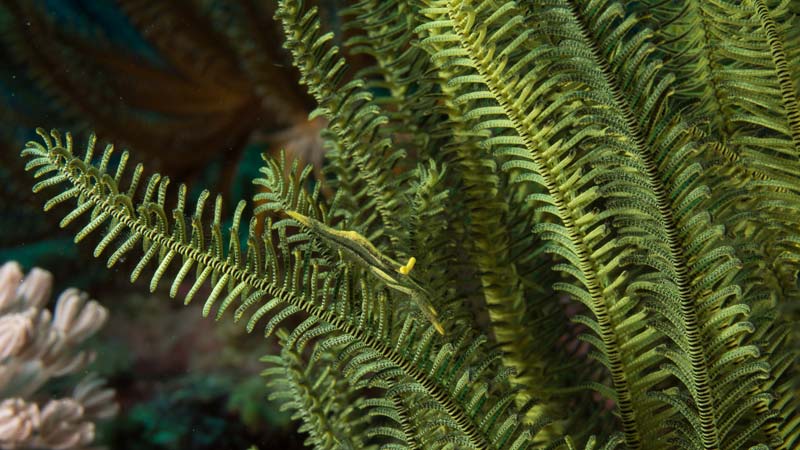
Crinoid
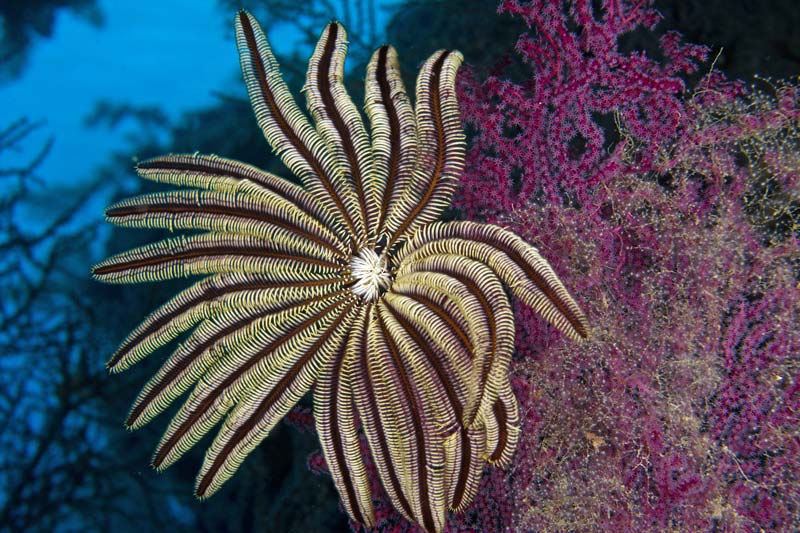
Crinoid
Echinoids: Sea Urchins
The class Echinoidea includes the sea urchins, heart urchins, cake urchins and familiar sand dollars.
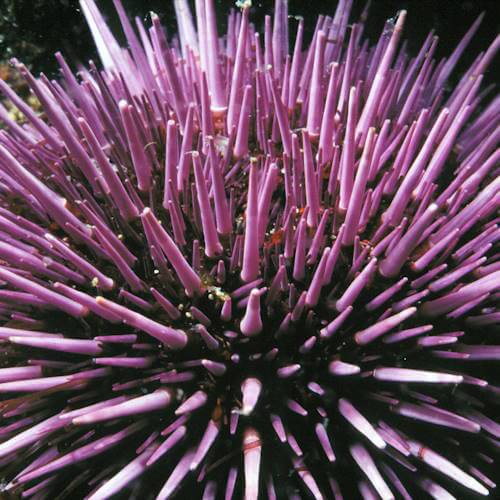
Spiny Protection
Sea urchins are well known to most people, having a large number of sharp spines pointing out in all directions. These spines offer protection from many would-be predators. The spines are joined to the skeleton of the animal, called the test, in a form of ball-joint.
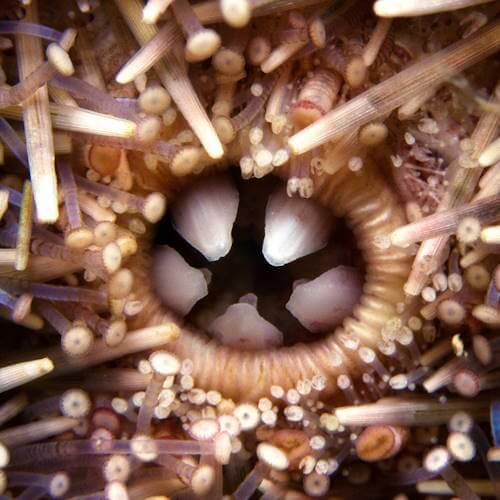
Aristotle’s Lantern
The creature has 5 paired rows of tube feet which, when extended, are long enough to reach past the length of the spines. They contain suckers. The anus is on the top of the creature, while the mouth is on the underside.
Holothuroids: Sea Cucumbers
The class Holothuroidea is composed of creatures called sea cucumbers. A sea cucumber is so named due to the fact that many members of the group (but not all) resemble the garden variety of cucumber. The similarity ends there.
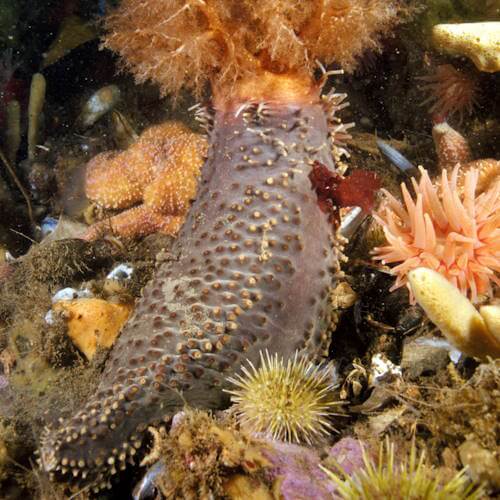
Body Structure
Sea cucumbers are usually somewhat football shaped and lay on their side on the bottom. They have 5 rows of tube feet running lengthwise, like the seams on a football. Three of the rows of tube feet are well developed and are in contact with the substrate. The other two rows are usually either underdeveloped (and not used) or missing completely.
Feeding Behavior
The sea cucumber feeds in a fascinating way. It may position itself in a spot on the ocean floor where a current will bring a steady supply of food (plankton and other organic particles) its way. The tentacles are opened to collect the food.
Defense Mechanisms
Toxicity: Many sea cucumbers are quite poisonous. These cucumbers, if injured, can kill fish in the same aquarium. The poison of some sea cucumbers has shown promise as an inhibitor in the growth of cancer cells.
Culinary Note: The Chinese eat certain sea cucumbers, and consider them quite delicious. Some species have edible muscular body walls with a somewhat “gelatinous” texture.
Crinoids: Feather Stars
The class Crinoidea includes sea lilies and feather stars, named for their superficial resemblance to flowers and drifting plumes. Despite their plant-like poise, these are distinctly animals with a crown of long, delicate arms branching from a cup-shaped central disk called the calyx.
Sea lilies anchor to the seafloor with a jointed stalk, while feather stars lack a permanent stalk as adults. Instead, they perch using small claw-like cirri or swim gracefully by rhythmically waving their arms, a sight that looks like an underwater ballet performed by ornate fans.
Crinoids feed in a way that is both efficient and mesmerizing. Each arm bears rows of tiny branches equipped with sticky tube feet that form a living net in the current. As water flows past, plankton and detritus become ensnared. The captured food is passed down grooves toward the mouth, which sits atop the calyx. A busy feather star can sit for hours, quietly harvesting whatever the ocean delivers.
If grabbed by a predator, crinoids shed their arms and regenerate new ones. Their fossil record stretches back over 450 million years. A living sea lily standing on its stalk today looks remarkably similar to its ancient ancestors.
Amazing Adaptability
No matter what you think about the looks of Echinoderms, they are very interesting and diverse animals with amazing adaptability. From the powerful sea star that can pry open clams, to the regenerating limbs, to the self-eviscerating sea cucumber, echinoderms have developed remarkable survival strategies over millions of years.
Echinoderm Classes
Asteroidea
1,900+ species – True sea stars, sun stars
Ophiuroidea
2,000+ species – Brittle stars, basket stars
Echinoidea
950+ species – Sea urchins, sand dollars
Holothuroidea
1,400+ species – Sea cucumbers
Crinoidea
600+ species – Sea lilies, feather stars
Echinoderm Gallery
The mouth of an Aristotles Lantern Sea Urchin
This basket star, photographed in the Caribbean, is a good example of a Ophiuroid.
Crinoid
Horse Star
The Orange-footed sea cucumber lives in the North Atlantic. It resembles a football with tentacles at one end for feeding.
A sea cucumber’s feathery tentacles. It catches plankton in its arms and then licks them off one at a time.
This sea cucumber is eviscerating a portion of its intestines to thwart an attack.
This Northern sea star, photographed in Massachusetts, is regenerating two lost arms. It will take over a year, but they will be good as new!
Two sea star species resting on underwater rocks
Sea Star tube feet
This Purple sea urchin from California has hundreds of pointy spines for protection.
The Tiger Tail sea cucumber feeds on particles found in the sand on the bottom.
Crinoid
Crinoid
Crinoid
Explore More Wonders
Sponges
Sharks
Coral Reefs
Cnidarians
Mollusks
Sperm Whales
Chessie
Mangroves
Arthropods