
Sharks: Predators with a Purpose!
Amazing Fact: Sharks can detect one drop of blood dissolved in a million gallons of water! These predators with a purpose have existed for over 400 million years, long before dinosaurs walked the Earth. Far from primitive, sharks possess incredible senses that make them perfectly adapted to their ocean environment.
Ancient Yet Sophisticated
Sometimes sharks are referred to as primitive creatures. They are an ancient group of animals, so it might seem correct to assume that they are primitive. Unfortunately, this assumption is wrong.
Recent studies have shown that sharks are, in fact, quite sophisticated. Are these the attributes of a primitive animal?
Diversity of Sharks
Sharks come in many shapes and sizes. The largest fish in the ocean is, in fact, the tremendous whale shark, reaching about 60 feet in length. The smallest known shark is only a few inches long when fully grown.
While many sharks do have conspicuous teeth, many of these animals eat only small invertebrates. Other sharks have no teeth at all, feeding by straining plankton from the water much like the baleen whales do.



Shark Facts
400+ Million Years Old
Older than dinosaurs!
1:1,000,000
Blood detection ratio in water
60 Feet
Whale shark – largest fish
Lightning > Sharks
More likely to be struck by lightning than attacked
Endangered
Populations declining worldwide
Shark Gallery
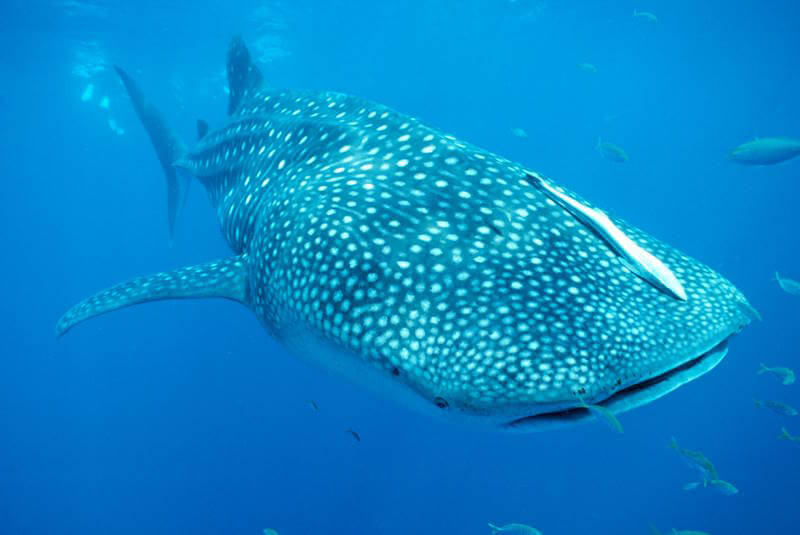
The Whale shark (Rhincodon typus) is the largest fish on Earth, possibly reaching 60 feet in length, or about as long as two school buses! This whale shark has a remora riding on it’s head. (The remora is a kind of fish that acts like a suction cup, attaching to larger animals to get a free ride).
The Whale shark (Rhincodon typus) is the largest fish on Earth, possibly reaching 60 feet in length, or about as long as two school buses! This whale shark has a remora riding on it’s head. (The remora is a kind of fish that acts like a suction cup, attaching to larger animals to get a free ride).

The Scalloped Hammerhead in the Galapagos islands. This shark is extremely frightened of divers bubbles.
The Scalloped Hammerhead in the Galapagos islands. This shark is extremely frightened of divers bubbles.

The Grey Reef shark (Carcharhinus amblyrhynchos) is common around Pacific coral reefs, feeding mostly on fish and invertebrates. They reach a little over 7 feet in length. These sharks tend to swim together in groups, unlike most other sharks, making them dangerous, even though they are small. Photo by Jonathan Bird
The Grey Reef shark (Carcharhinus amblyrhynchos) is common around Pacific coral reefs, feeding mostly on fish and invertebrates. They reach a little over 7 feet in length. These sharks tend to swim together in groups, unlike most other sharks, making them dangerous, even though they are small. Photo by Jonathan Bird
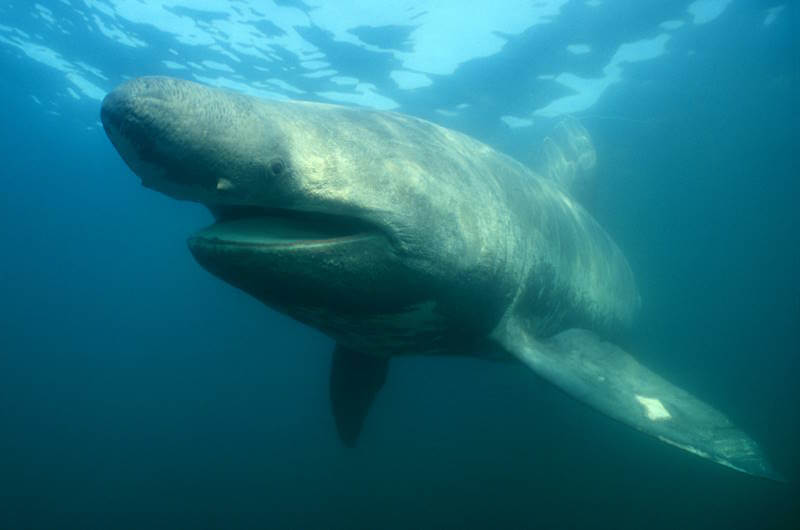
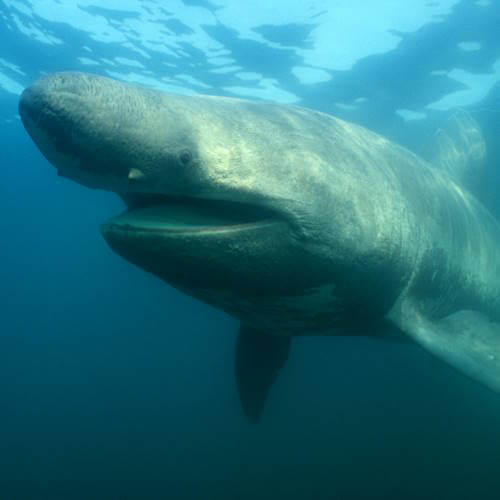
The Basking Shark (Cetorhinus maximus) , is a filter feeder, and eats only zooplankton and small fishes. The filter-feeding scheme works well: the Basking Shark can grow to 45 feet, making it the world’s second largest fish. This shark inhabits the cooler temperate regions of the world’s oceans. It is frequently mistaken for a whale as it cruises just at or below the surface straining plankton. Photo by Jonathan Bird
The Basking Shark (Cetorhinus maximus) , is a filter feeder, and eats only zooplankton and small fishes. The filter-feeding scheme works well: the Basking Shark can grow to 45 feet, making it the world’s second largest fish. This shark inhabits the cooler temperate regions of the world’s oceans. It is frequently mistaken for a whale as it cruises just at or below the surface straining plankton. Photo by Jonathan Bird
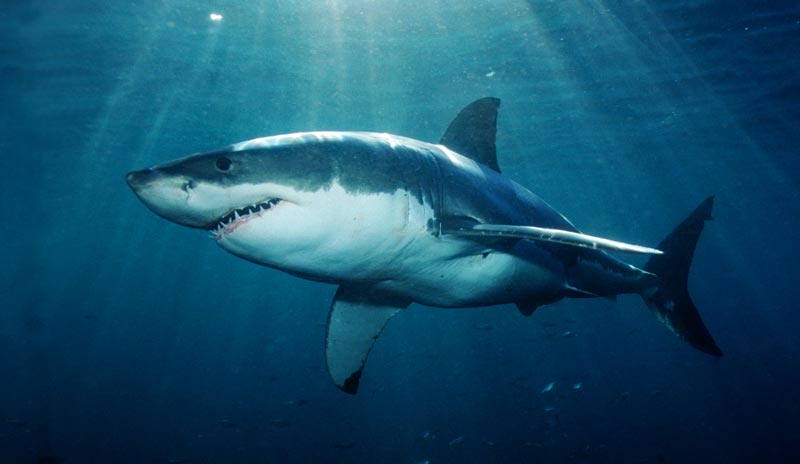
Great white shark swimming underwater viewed from the side.
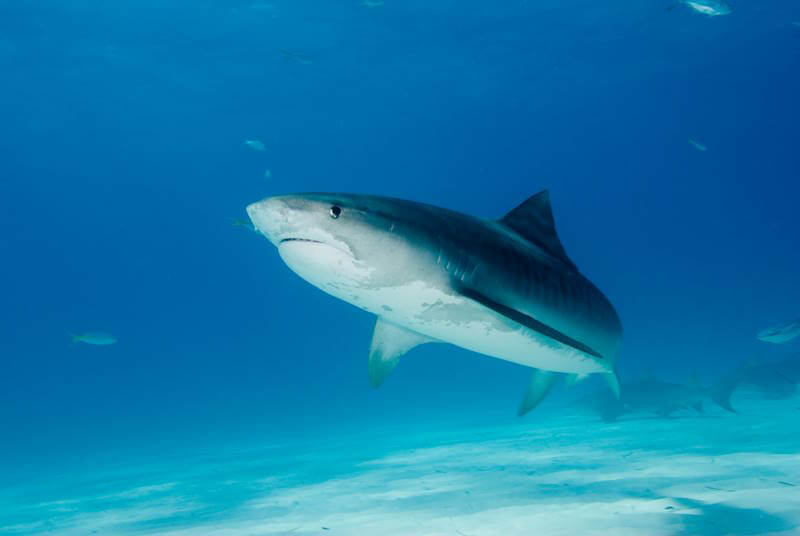
Tiger shark
Tiger shark
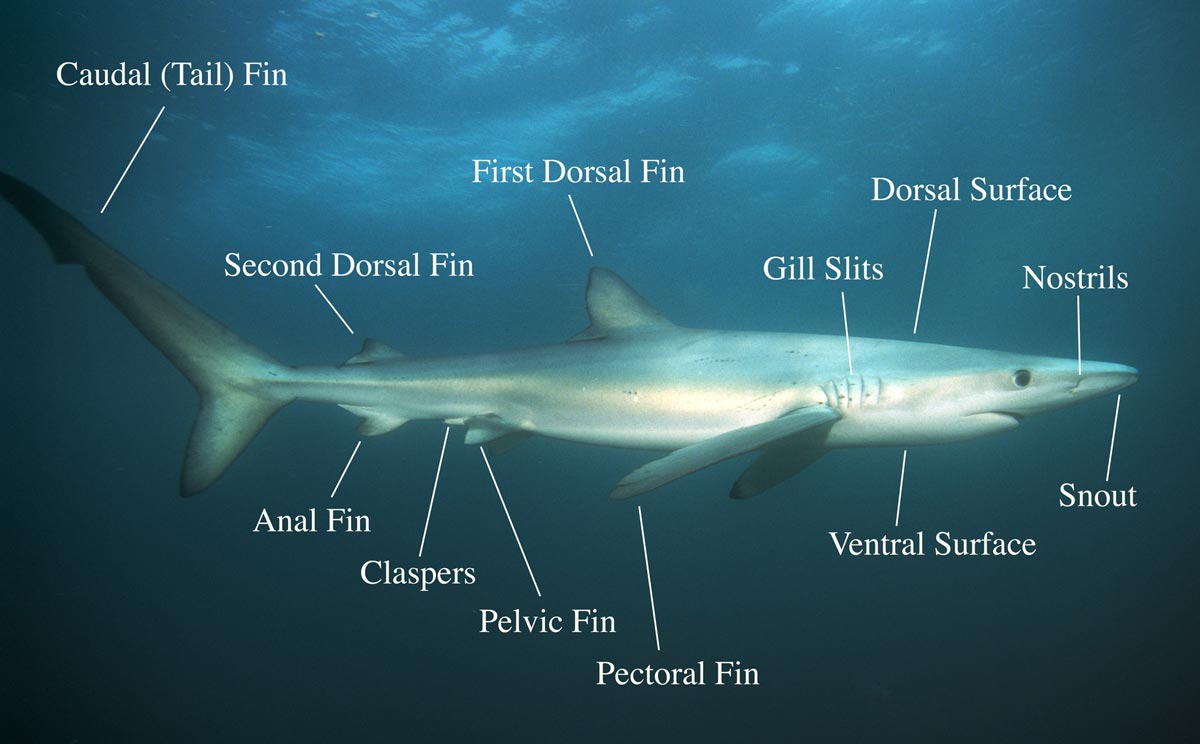
The parts of a shark

How do you tell a male from a female shark? The picture above shows a MALE. The male has a pair of claspers at the base of the pelvic fins.
How do you tell a male from a female shark? The picture above shows a MALE. The male has a pair of claspers at the base of the pelvic fins.
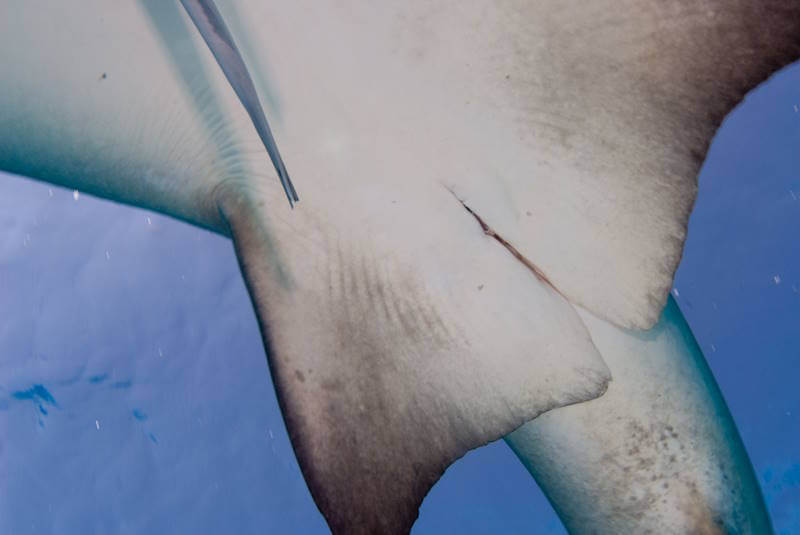
This is a female, showing a lack of claspers on the pelvic fins.
This is a female, showing a lack of claspers on the pelvic fins.
The Truth About Shark Attacks
The myth that sharks are maneaters has been established throughout history with startling regularity. The fact is, you are much more likely to be hit by a car, bitten by a dog, or even struck by lightning than you are to be attacked by a shark, except under the most unusual of circumstances.
Certainly sharks can eat people, but the simple fact is that they rarely do. They are no more dangerous to people than any other large predator, like a tiger or a lion.
Important Question: Why do we label the shark a killer, while we call the lion magnificent?
Ecological Importance
Top Predators
Sharks are very important in the ocean ecosystem. Like most top predators, sharks feed on the sick and weak, thereby keeping the schools of fish on which they feed healthy.
Lions and tigers serve the same role in their respective ecosystems, removing the weaker animals from the herds, and keeping the gene pool strong.
Shark Anatomy
Male vs Female Identification
How do you tell a male from a female shark?

Male sharks have a pair of claspers at the base of the pelvic fins. These are reproductive organs used for internal fertilization.
Female sharks show a lack of claspers on the pelvic fins, having only the cloaca opening.
Shark Facts
400+ Million Years Old
Older than dinosaurs!
1:1,000,000
Blood detection ratio in water
60 Feet
Whale shark – largest fish
Lightning > Sharks
More likely to be struck by lightning than attacked
Endangered
Populations declining worldwide
Shark Gallery
The Whale shark (Rhincodon typus) is the largest fish on Earth, possibly reaching 60 feet in length, or about as long as two school buses! This whale shark has a remora riding on it’s head. (The remora is a kind of fish that acts like a suction cup, attaching to larger animals to get a free ride).
The Whale shark (Rhincodon typus) is the largest fish on Earth, possibly reaching 60 feet in length, or about as long as two school buses! This whale shark has a remora riding on it’s head. (The remora is a kind of fish that acts like a suction cup, attaching to larger animals to get a free ride).
The Scalloped Hammerhead in the Galapagos islands. This shark is extremely frightened of divers bubbles.
The Scalloped Hammerhead in the Galapagos islands. This shark is extremely frightened of divers bubbles.
The Grey Reef shark (Carcharhinus amblyrhynchos) is common around Pacific coral reefs, feeding mostly on fish and invertebrates. They reach a little over 7 feet in length. These sharks tend to swim together in groups, unlike most other sharks, making them dangerous, even though they are small. Photo by Jonathan Bird
The Grey Reef shark (Carcharhinus amblyrhynchos) is common around Pacific coral reefs, feeding mostly on fish and invertebrates. They reach a little over 7 feet in length. These sharks tend to swim together in groups, unlike most other sharks, making them dangerous, even though they are small. Photo by Jonathan Bird
The Basking Shark (Cetorhinus maximus) , is a filter feeder, and eats only zooplankton and small fishes. The filter-feeding scheme works well: the Basking Shark can grow to 45 feet, making it the world’s second largest fish. This shark inhabits the cooler temperate regions of the world’s oceans. It is frequently mistaken for a whale as it cruises just at or below the surface straining plankton. Photo by Jonathan Bird
The Basking Shark (Cetorhinus maximus) , is a filter feeder, and eats only zooplankton and small fishes. The filter-feeding scheme works well: the Basking Shark can grow to 45 feet, making it the world’s second largest fish. This shark inhabits the cooler temperate regions of the world’s oceans. It is frequently mistaken for a whale as it cruises just at or below the surface straining plankton. Photo by Jonathan Bird
Great white shark swimming underwater viewed from the side.
Tiger shark
Tiger shark
The parts of a shark
How do you tell a male from a female shark? The picture above shows a MALE. The male has a pair of claspers at the base of the pelvic fins.
How do you tell a male from a female shark? The picture above shows a MALE. The male has a pair of claspers at the base of the pelvic fins.
This is a female, showing a lack of claspers on the pelvic fins.
This is a female, showing a lack of claspers on the pelvic fins.
Explore More Wonders
Sponges
Coral Reefs
Echinoderms
Cnidarians
Mollusks
Sperm Whales
Chessie
Mangroves
Arthropods