Cnidarians: Simple Animals With a Sting!
Amazing Fact: Cnidarians have been around for over 500 million years! The name literally means “stinging creature,” and this group of 9,000 species lives up to it. These simple yet sophisticated animals use specialized stinging cells to capture prey and defend themselves, making them some of the ocean’s most successful predators.
What Makes Cnidarians Special?
All Cnidarians share certain characteristics making them unique from other phyla. The most distinctive feature is their specialized stinging cells called cnidocytes (NY-doh-sites), which contain nematocysts – tiny harpoon-like structures used for capturing prey and defense.
The Cnidocyte: Nature’s Fastest Weapon
The cnidocyte is one of the fastest cellular processes in nature! When triggered by touch or chemical signals, the coiled nematocyst fires in less than 700 nanoseconds, reaching accelerations of over 5 million g’s – faster than a bullet!
The stinging thread penetrates prey and injects toxins, paralyzing small organisms instantly. Each cnidocyte can only fire once, so cnidarians continuously produce new stinging cells throughout their lives.
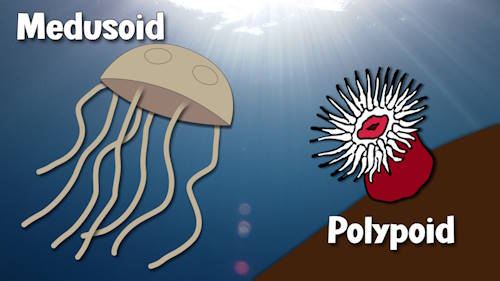
Two Body Forms
Cnidarians exist in two basic forms, and some species alternate between both during their life cycle:
Radial Symmetry
Unlike bilateral animals (like humans), cnidarians possess radial symmetry – their body parts radiate from a central axis like spokes on a wheel. This design is perfectly suited for their sessile or drifting lifestyle, allowing them to capture prey from any direction.
Simple But Effective
Two Cell Layers: Cnidarians have only two tissue layers (epidermis and gastrodermis) separated by a jelly-like mesoglea. Despite this simplicity, they’re highly successful predators!
One Opening: Cnidarians have a single opening that serves as both mouth and anus. Their gastrovascular cavity digests food and distributes nutrients throughout the body.
No Brain: Instead of a centralized brain, cnidarians have a nerve net – a diffuse network of neurons that coordinates movement and responses to stimuli.
Cnidarian Groups
Scyphozoa
200+ species – True jellyfish
Anthozoa
6,000+ species – Corals & sea anemones
Hydrozoa
3,500+ species – Hydroids & siphonophores
Cubozoa
50+ species – Box jellyfish
Cnidarian Gallery
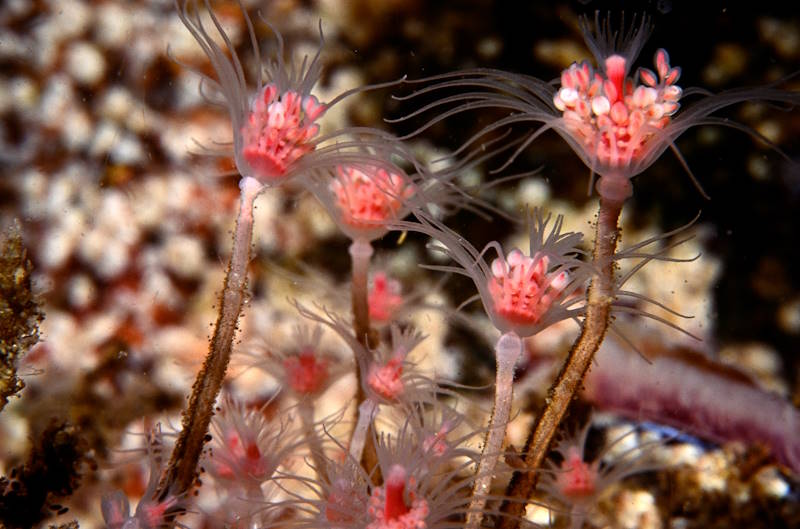
The are Pink Hearted hydroids, members of the class Hydrozoa. They look like delicate plants but they are animals that sting and capture food.
The are Pink Hearted hydroids, members of the class Hydrozoa. They look like delicate plants but they are animals that sting and capture food.
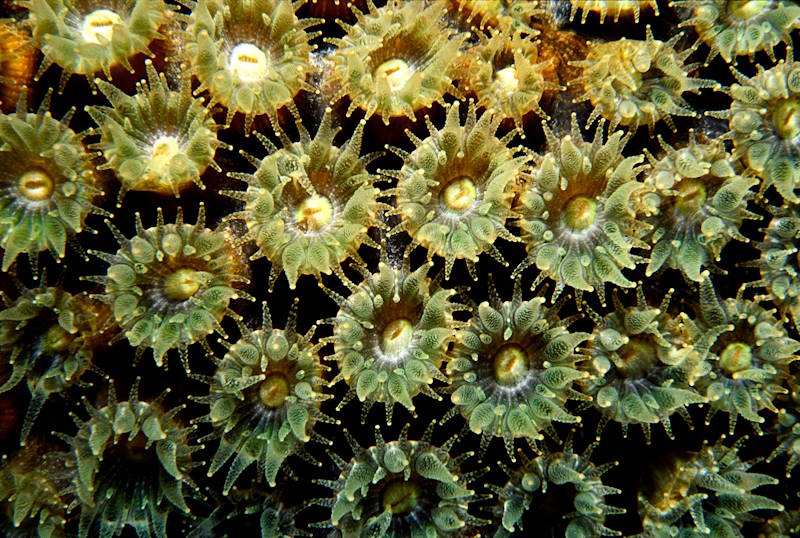
A coral colony consists of hundreds or thousands of tiny polyps. Each polyp is an individual animal (basically a small anemone) but they live together as a group.
A coral colony consists of hundreds or thousands of tiny polyps. Each polyp is an individual animal (basically a small anemone) but they live together as a group.
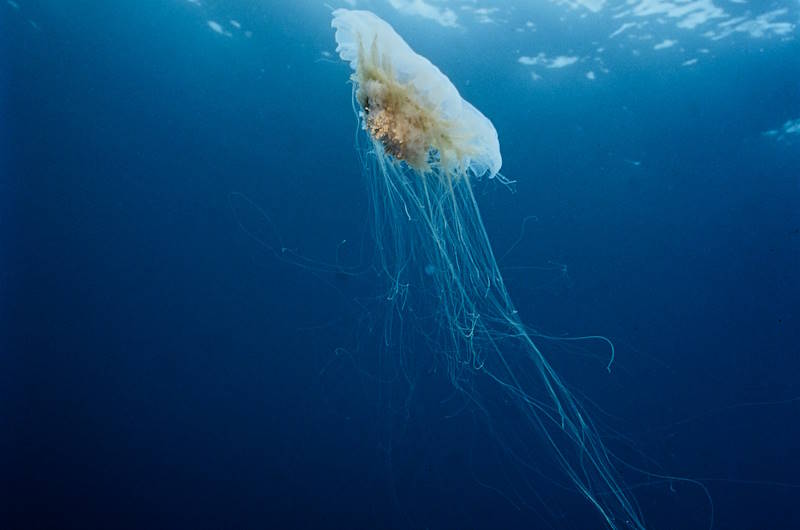
The Lion’s Mane Jelly is a venomous Scyphozoan which can sting people with its long tentacles. Since the tentacles can hang so far down, the jelly can use these tentacles to kill fish which swim through them without ever seeing the jelly itself way up above! This is an example of a cnidarian with a medusoid shape.
The Lion’s Mane Jelly is a venomous Scyphozoan which can sting people with its long tentacles. Since the tentacles can hang so far down, the jelly can use these tentacles to kill fish which swim through them without ever seeing the jelly itself way up above! This is an example of a cnidarian with a medusoid shape.
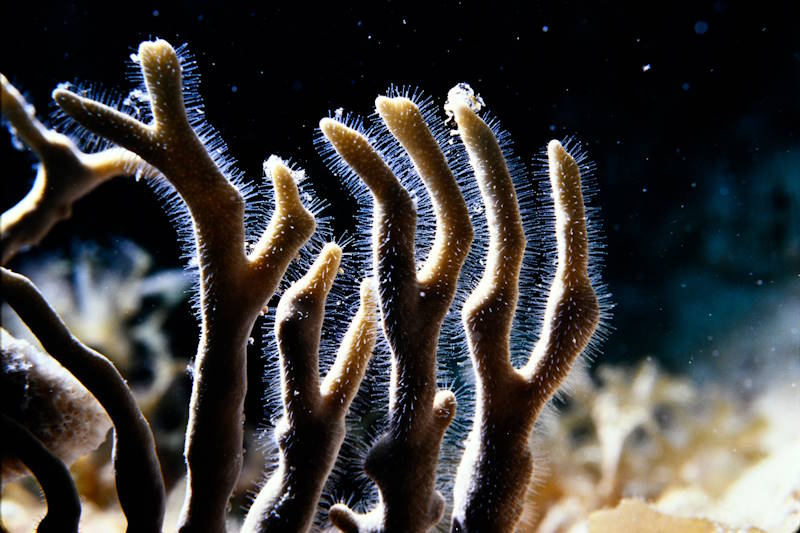
This is fire coral. It has a potent sting that leaves an itchy rash on human skin. It is not technically a coral, but a kind of hydroid that encrusts other objects (including other corals).
This is fire coral. It has a potent sting that leaves an itchy rash on human skin. It is not technically a coral, but a kind of hydroid that encrusts other objects (including other corals).
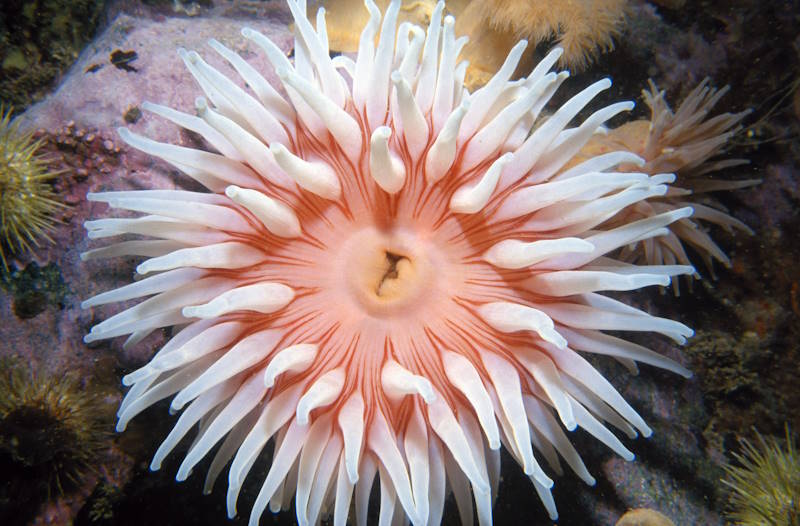
Tealia Anemone
Tealia Anemone
Featured Cnidarians
Jellyfish (Class Scyphozoa)
True jellyfish are the iconic free-swimming medusae. The Moon Jellyfish is among the most recognizable worldwide, with its translucent bell reaching 40 cm in diameter and four horseshoe-shaped gonads clearly visible.
The massive Lion’s Mane Jellyfish is Earth’s longest animal, with tentacles extending over 120 feet! Found in cold Arctic waters, their bells can reach 7 feet in diameter, and their reddish-orange tentacles resemble a lion’s mane.
Box Jellyfish Warning: Box jellyfish (Class Cubozoa) are the most venomous marine animals on Earth. Unlike other jellyfish, they have well-developed eyes and can actively swim at speeds up to 4 knots. Their powerful venom can cause cardiac arrest in humans within minutes.
Amazing Abilities
Biological Immortality
The Turritopsis dohrnii, known as the “immortal jellyfish,” can reverse its aging process! When stressed, injured, or starving, this tiny jellyfish (about 4.5mm) transforms back from its mature medusa form into its juvenile polyp stage.
This process, called transdifferentiation, allows specialized cells to transform into different cell types, essentially restarting the jellyfish’s life cycle. It can theoretically repeat this process indefinitely, making it biologically immortal!
Bioluminescence
Many cnidarians produce their own light through chemical reactions! The Crystal Jelly produces green fluorescent protein (GFP), a discovery that revolutionized medical research and earned scientists the 2008 Nobel Prize in Chemistry.
GFP is now used worldwide as a biological marker to track cells, genes, and proteins. Deep-sea siphonophores create dazzling light displays to attract prey and communicate in the darkness.
Cnidarian Groups
Scyphozoa
200+ species – True jellyfish
Anthozoa
6,000+ species – Corals & sea anemones
Hydrozoa
3,500+ species – Hydroids & siphonophores
Cubozoa
50+ species – Box jellyfish
Cnidarian Gallery
The are Pink Hearted hydroids, members of the class Hydrozoa. They look like delicate plants but they are animals that sting and capture food.
The are Pink Hearted hydroids, members of the class Hydrozoa. They look like delicate plants but they are animals that sting and capture food.
A coral colony consists of hundreds or thousands of tiny polyps. Each polyp is an individual animal (basically a small anemone) but they live together as a group.
A coral colony consists of hundreds or thousands of tiny polyps. Each polyp is an individual animal (basically a small anemone) but they live together as a group.
The Lion’s Mane Jelly is a venomous Scyphozoan which can sting people with its long tentacles. Since the tentacles can hang so far down, the jelly can use these tentacles to kill fish which swim through them without ever seeing the jelly itself way up above! This is an example of a cnidarian with a medusoid shape.
The Lion’s Mane Jelly is a venomous Scyphozoan which can sting people with its long tentacles. Since the tentacles can hang so far down, the jelly can use these tentacles to kill fish which swim through them without ever seeing the jelly itself way up above! This is an example of a cnidarian with a medusoid shape.
This is fire coral. It has a potent sting that leaves an itchy rash on human skin. It is not technically a coral, but a kind of hydroid that encrusts other objects (including other corals).
This is fire coral. It has a potent sting that leaves an itchy rash on human skin. It is not technically a coral, but a kind of hydroid that encrusts other objects (including other corals).
Tealia Anemone
Tealia Anemone
Explore More Wonders
Sponges
Sharks
Coral Reefs
Echinoderms
Mollusks
Sperm Whales
Chessie
Mangroves
Arthropods